Building Something That Matters: How Claude Code Helped Me Create a Bible Inspiration Chatbot
Building Something That Matters: How Claude Code Helped Me Create a Bible Inspiration Chatbot
Intro
Have you ever had an idea that just wouldn’t leave you alone? Something you felt deeply about but didn’t quite have the time or technical bandwidth to build?
That was me with this Bible inspiration chatbot.
Depression and mental health struggles affect so many people — young and old alike. I wanted to create something simple, accessible, and deeply rooted in Scripture that could offer encouragement when someone needed it most. Not a replacement for therapy or pastoral care, but a gentle companion for moments of struggle.
The problem? My schedule was packed. Learning a new framework, setting up infrastructure, debugging deployment issues — all of that would normally take weeks I didn’t have.
Enter Claude Code.
What I Built (And Why It Matters)
Get Inspired by the Bible is a simple chatbot that draws solely from Biblical scripture to provide encouragement, answer questions about faith, and offer comfort during difficult times.
The interface is clean and straightforward:
- Share what’s on your heart
- Ask questions about Scripture
- Seek encouragement for whatever you’re facing
- Explore theological topics (with appropriate caveats that it’s not a substitute for trained theologians)
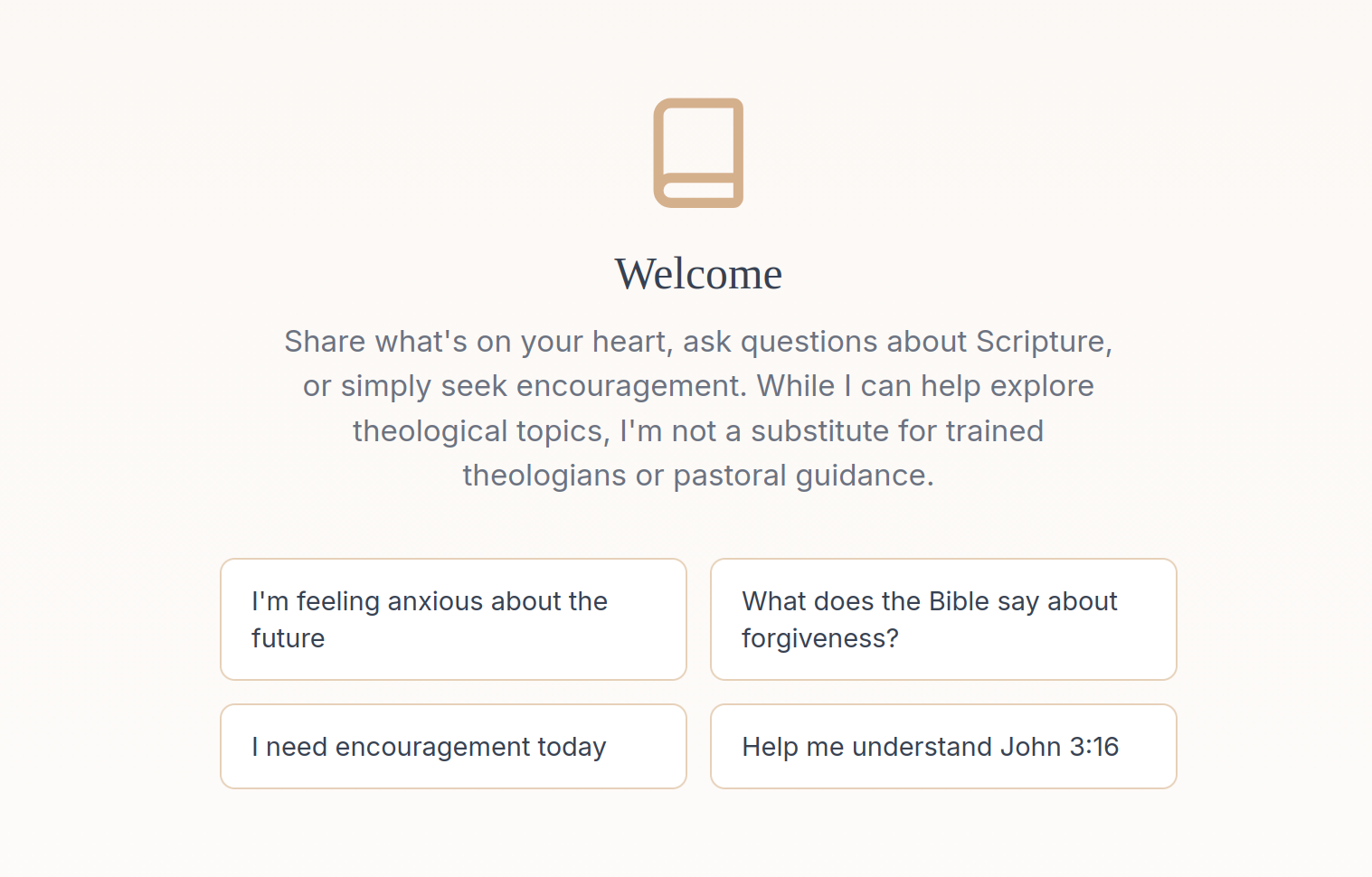 The welcome screen offers simple prompts to help users get started with their questions and concerns.
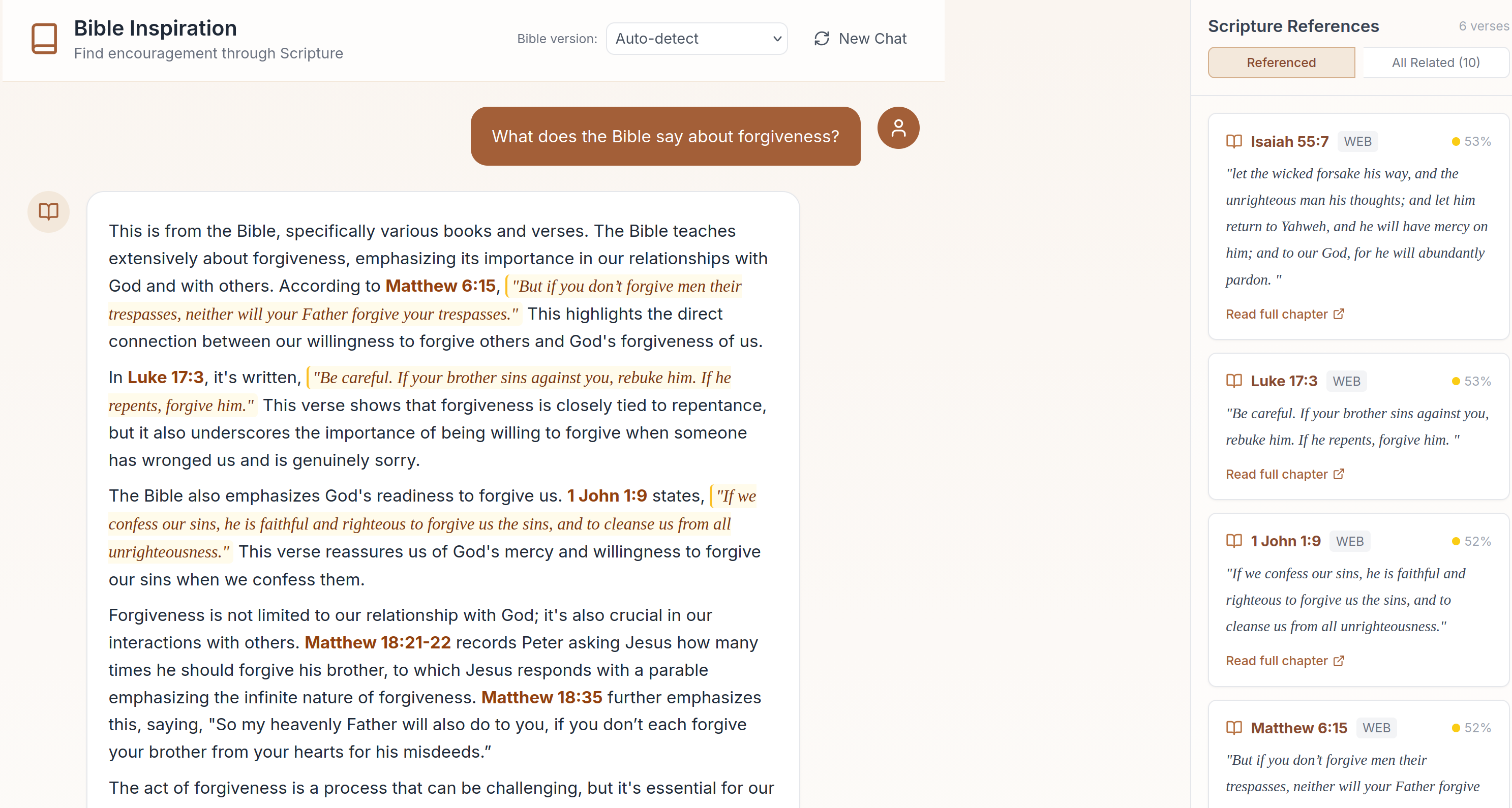 The chatbot provides detailed Biblical responses with relevant scripture references, making it easy to explore related verses.
It’s not trying to be everything. It’s trying to be one thing done well: a place to find hope and inspiration when you need it.
The Claude Code Experience: Real Talk
Let me be honest — this wasn’t a perfect, magical “one prompt and done” experience. But it was transformative.
What Worked Brilliantly
Rapid Prototyping
After just one afternoon of working with Claude Code, I had a functioning prototype. Not a concept. Not a wireframe. A working chatbot I could actually interact with.
That’s wild. In the traditional workflow, I’d still be setting up my development environment and picking a tech stack.
Iterative Refinement
The real power came in the iteration loop. I’d test something, spot an issue, describe what I wanted differently, and Claude Code would help implement it. The feedback cycle compressed from hours to minutes.
Design Without Being a Designer
I’m not a UI/UX expert. But Claude Code helped me create a clean, accessible design that feels professional. Simple color palette, clear typography, intuitive navigation. Nothing fancy, but it works.
Where It Got Messy
GitHub Workflow Confusion
Claude Code got tangled up a few times updating the GitHub Actions workflow. I had to step in, manually fix some YAML configurations, and guide it back on track. Not a dealbreaker, but definitely a reminder that we’re working with an assistant, not a replacement developer.
Context Switching
Occasionally, Claude Code would lose track of what we were working on — especially when I switched between different aspects of the project (frontend, backend, deployment). I learned to be more explicit about context when starting new tasks.
What This Means for Solo Developers
Here’s what hit me while building this: AI isn’t replacing developers; it’s empowering people with ideas.
I’m not a professional frontend developer. I don’t have hours to spend learning the latest JavaScript framework. But I had an idea I cared about deeply, and Claude Code helped me bridge that gap.
This is the democratization of creation we’ve been talking about for years, but now it’s actually happening.
My Digital Dreams Are Getting Closer
I’ve had a running list of “someday” projects for years. Ideas that mattered to me but seemed perpetually out of reach given my time constraints and skill gaps.
For the first time, that list feels achievable.
Not because AI will do everything for me, but because it’s removing the friction between idea and implementation. The scaffolding work, the boilerplate, the “I know what I want but not how to code it” moments — those are where AI shines.
The Human Element (Still Essential)
Here’s what Claude Code couldn’t do:
Vision
The idea came from me. The understanding of what would be helpful, what tone to strike, what Scripture should guide responses — that required human judgment and care.
Quality Control
I tested extensively. I refined prompts. I made sure responses were appropriate, theologically sound (to my understanding), and genuinely helpful. AI can generate; humans must validate.
Purpose
Technology is just a tool. The “why” behind this project — the empathy for people struggling with mental health, the desire to offer hope — that’s entirely human.
Technical Stack (For the Curious)
For those interested in the nuts and bolts:
- Frontend: Clean HTML/CSS/JavaScript interface
- Backend: Simple API handling chat interactions
- Hosting: Deployed on Azure, Openrouter and my existing blog at ai4you.sh
- Source Control: GitHub with automated deployment via GitHub Actions
The entire codebase is open source on GitHub if you want to see how it’s built, suggest improvements, or fork it for your own purposes.
What’s Next
This is version 1.0. It works, it’s helpful, but there’s room to grow:
- Better Scripture Context: Currently, it pulls relevant verses. I’d love to add more contextual information about when and why passages were written.
- Multi-Language Support: Bible already in English, German and Italian. More to come.
- Accessibility Improvements: Better screen reader support, keyboard navigation, and visual adjustments for different needs.
But honestly? I’m just happy it exists. It’s out there. Someone having a rough day can visit that URL and find encouragement. That’s what matters.
Try It Yourself
If you’re curious, give it a try: getinspiredbythebible.ai4you.sh
And if you’re a developer (or aspiring one), check out the source code. It’s a great example of what’s possible when you combine AI assistance with a clear vision and genuine purpose.
I’d love to hear your thoughts. What worked? What could be better? What would make it more helpful?
Feel free to open an issue on GitHub or reach out through the contact form on the site.
Final Thoughts
AI tools like Claude Code aren’t perfect. They’ll frustrate you sometimes. They’ll take wrong turns.
But they’re also unlocking possibilities that seemed out of reach just months ago.
For me, that’s not about building the next unicorn startup. It’s about creating things that matter — projects that help people, that scratch a personal itch, that make the world slightly better.
And if AI can help more people do that? That’s something worth celebrating.
Have you built something meaningful with AI assistance? What was your experience? Drop a comment or share your story — I’d love to hear it.
🦋 Give me your feedback on Bluesky: bsky.app
🐦 Give me your feedback on X: x.com
🐙 or reach out on GitHub!
Happy coding and creating! 🤖
P.S. If you found this helpful, check out my YouTube channel for video tutorials and live coding sessions. Subscribe to stay updated on new AI experiments and practical guides!